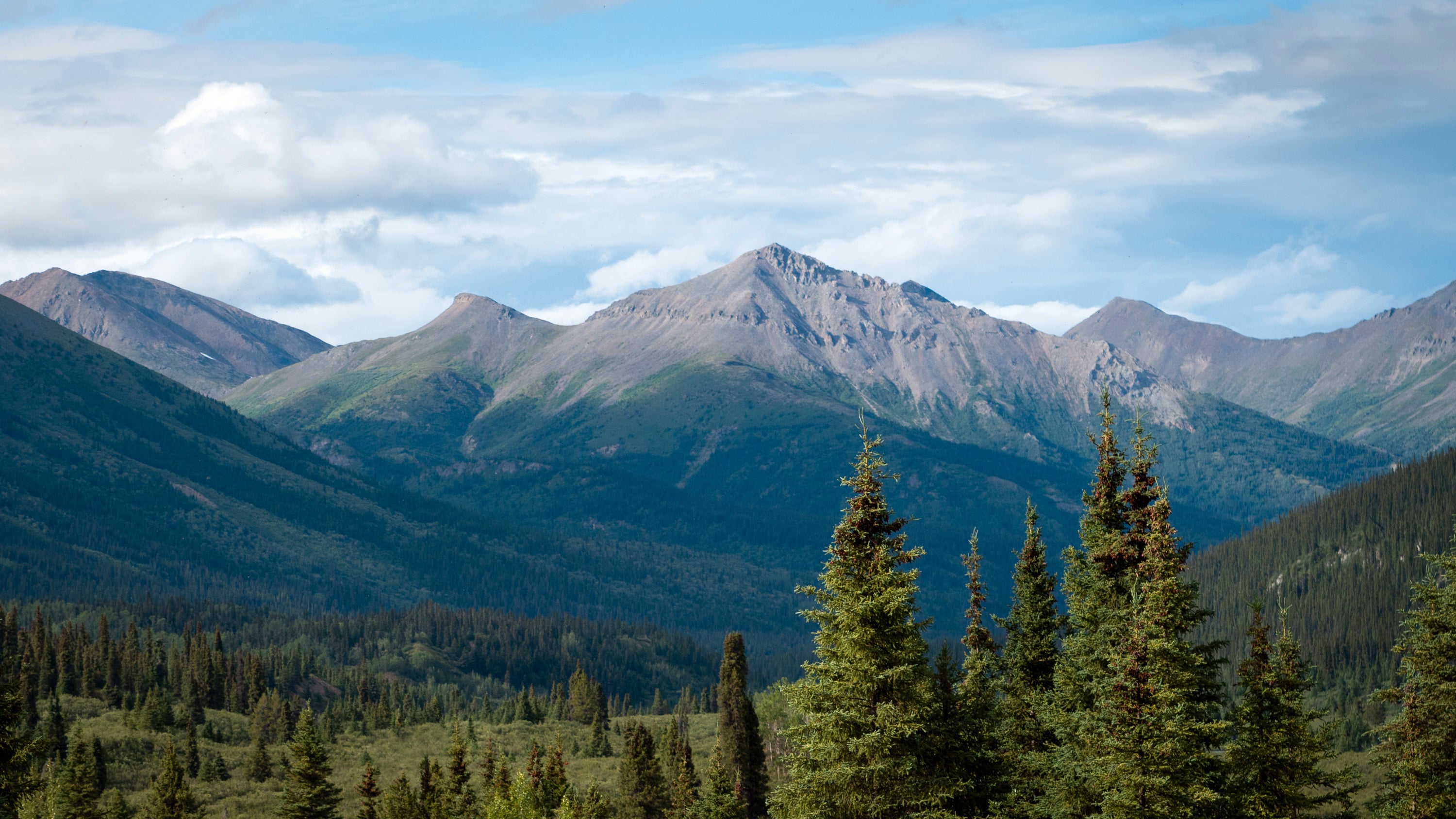



Between rivers and mountains: crossing northwestern Canada by bike and canoe
During the summer of 2024, our ambassador Samuel Lalande-Markon, alongside his teammates, set out on an ambitious journey across northwestern Canada by bike and canoe. Their goal was to travel from Whitehorse to the Arctic Ocean, following the Canol network and descending the Mackenzie River. But like any true adventure, things didn’t go as planned.
Text: Samuel Lalande-Markon
Photos: Marie-France L’Ecuyer
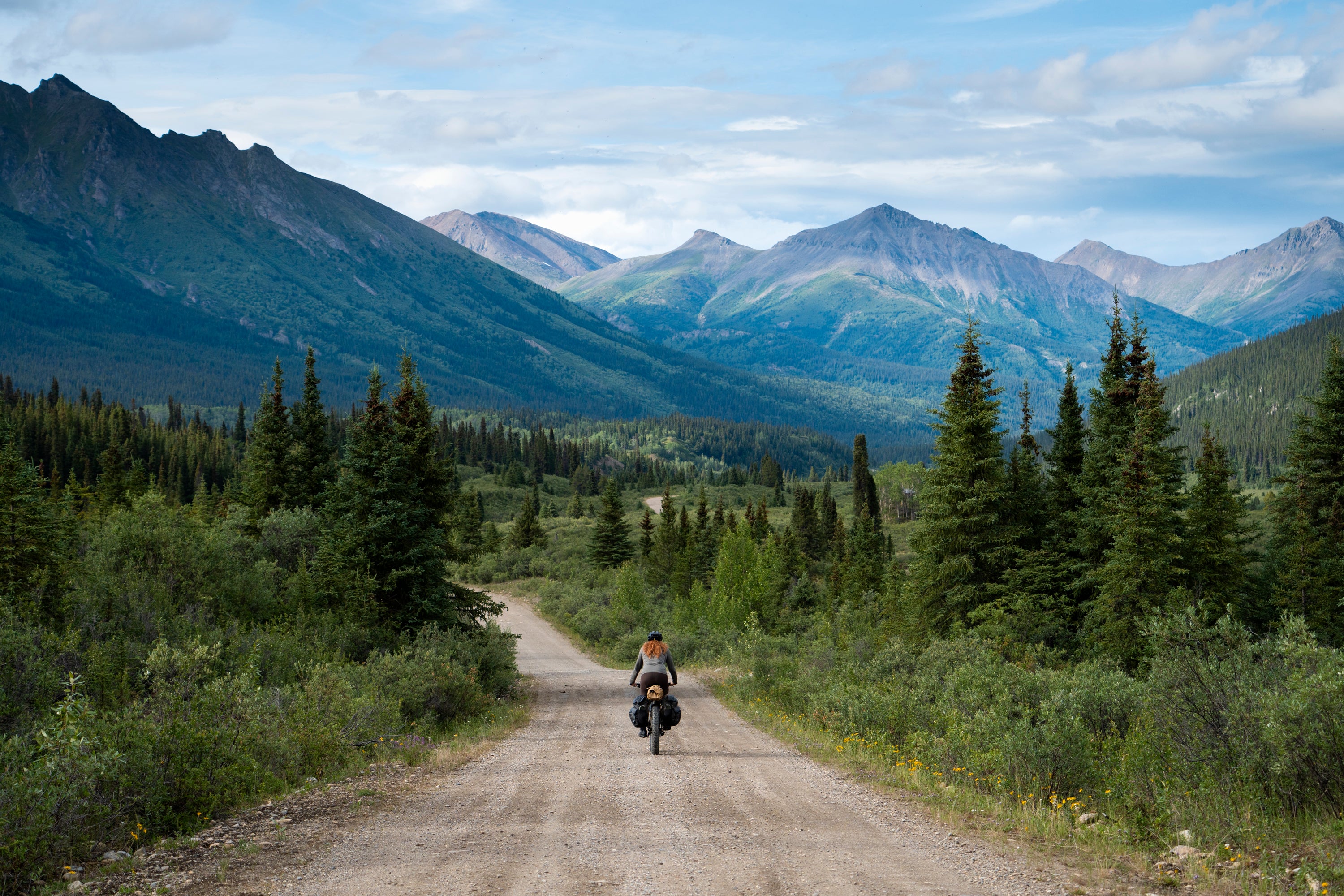

The story began a few years earlier. Félix-Antoine and I had long dreamed of riding a trail that cuts across the Mackenzie Mountains in northwestern Canada: the Canol Heritage Trail. Built during the Second World War to transport oil from Norman Wells to Whitehorse, the Canol pipeline (short for Canadian Oil) was abandoned soon after completion. Today, three distinct segments remain: the South and North Canol Roads, seasonal gravel roads that are relatively well maintained, and the Canol Heritage Trail itself, a 360-kilometer route left to the elements that requires watercraft to cross its many rivers.
Our original plan was to ride the entire Canol network starting from Whitehorse, then continue by packraft to the Dempster Highway at Tsiigehtchic, about 500 kilometers downstream from Norman Wells along the Mackenzie River. But the project evolved into a full traverse from Whitehorse to Tuktoyaktuk. My partner, Marie-France, joined the adventure, and my brother offered to take part in the Mackenzie River descent. We swapped our packrafts for two-person canoes. Félix-Antoine decided to ride to Whitehorse ahead of us, covering nearly 8,000 kilometers. What was meant to be a fast-and-light trip lasting a few weeks turned into a complex, multi-month, multi-sport expedition.


Félix-Antoine left Sudbury aboard his Anticosti in early May. His mountain bikes (a Torngat Ti and a Taïga EXP) were shipped to Whitehorse. Meanwhile, we sent our canoeing gear and food resupplies to Yellowknife, where a key partner, Jackpine Paddle, arranged to fly everything to Norman Wells, including our Ally Pack canoes. Coordinating all these moving pieces was already a feat in itself.
Marie-France and I flew to Whitehorse in mid-July to meet Félix-Antoine. From there, we headed southeast for a few days to reach Johnsons Crossing, where the road crosses the Teslin River and where the South Canol begins. This segment, close to 1,000 kilometers long, would take us to Norman Wells. Our bikes were heavily loaded with 14 days’ worth of food and fuel, inflatable boats, paddles, life jackets for river crossings, and full camping gear. Despite our efforts to keep things light, each setup tipped the scale at over 120 pounds.


Within the first few days, it became clear that our plan was too ambitious for our group. The days stretched longer, and fatigue quickly set in. Still, the effort was constantly rewarded: the dramatic relief of the Pelly Mountains, the northern landscapes shifting between boreal forest and alpine tundra, the calm waters of Quiet Lake, and the wild flow of the Lapie River. We arrived half a day behind schedule in Ross River, a small Kaska community located at the confluence of the Ross and Pelly Rivers. Irène and Jean-Claude, a couple Félix-Antoine had met on a previous trip, welcomed us for the night.
The Pelly River can be crossed either by a pedestrian suspension bridge or by a small ferry capable of carrying light vehicles. On the other side begins the North Canol Road, rougher than the South Canol but still relatively maintained for the first stretch. The climbing was constant, and we rode late into the evening to reach Dragon Lake. The days ahead promised to be even more demanding. I took on part of Marie-France’s load to lighten her bike, and we set off again the next morning.


Because we were riding at different paces, we had gotten used to stopping regularly to regroup whenever we lost sight of one another. That morning, we spotted two grizzly bears along the roadside, where fireweed was in full bloom. I reached Sheldon Lake after a long descent and waited for Félix-Antoine, then for Marie-France. But she never arrived. I turned back and found her injured and disoriented, her bike lying in the alders. What seemed like a minor bump had caused her fatbike, now lighter than before, to bounce unexpectedly. Combined with fatigue, she couldn’t recover in time to avoid the crash.
After long, exhausting hours, we made it back to Ross River in an RCMP pickup truck that had come to assist us. At the local clinic, the nurse recommended an X-ray. Nearly 30 hours after the accident, we returned to Whitehorse with Irène and Jean-Claude, where Marie-France made the decision to fly back to Montreal. I later shared a detailed account of these events in an article published in Géo Plein Air.


With the expedition already logistically complex, everything now had to be rethought. A friend of mine, Rémi Cloutier, agreed to join us for the canoe portion. Félix-Antoine continued on toward Tuktoyaktuk via the Dempster Highway. Having already completed the route before, he set himself the challenge of doing it fully self-supported, meaning no use of services along the way, not for food, camping, or even water. I followed soon after. It was my first time riding in the Yukon, and I allowed myself a detour to Dawson City, a place I had long known through the writings of Jack London and, more recently, Emmanuelle Pierrot.
Perhaps one day I will tell the story of my crossing of the Dempster Highway, a road of spectacular landscapes, relentless elevation, and infamous “peanut butter” mud when it rains. After reaching Tuktoyaktuk, I returned to Inuvik where Félix-Antoine was waiting for me. From there, we flew to Norman Wells to begin the river portion of the journey, paddling back in canoes with my brother Étienne and my friend Rémi. I’ve shared more about that segment in another article linked below.


Adventure comes with a great deal of uncertainty. Sometimes, you come out of it unscathed and stronger. Other times, diminished, but still changed for the better. We took the lessons we needed from this experience, and we often find ourselves thinking back, with a touch of nostalgia, to the breathtaking landscapes of the Yukon and the Northwest Territories, hoping to return one day.
To learn more about this adventure :
« La ligne brisée de l’aventure » : https://www.geopleinair.com/reportage/la-ligne-brisee-de-laventure/
« Sur les eaux du Dehcho » : https://www.geopleinair.com/reportage/sur-les-eaux-du-dehcho/